Nomination desk
Nominate Maingate Shipping for Lomé and the call is planned from the port's own facts: the coast of Togo, where a natural deep basin gives the only deep-water port on the Gulf of Guinea that takes the largest container ships without dredging, working the container terminals including the transshipment hub and the other berths the cargo needs. Attendance at Lomé is by our partner agent under Maingate's instruction; the Mombasa desk stays with the vessel from nomination to final DA.

A call at Lomé Port, Togo begins with the port's geography: the coast of Togo, where a natural deep basin gives the only deep-water port on the Gulf of Guinea that takes the largest container ships without dredging. Vessels work the container terminals including the transshipment hub, the general cargo and bulk berths, and the phosphate loading terminal at Kpémé along the coast, and which of these the vessel is bound for decides the pilot, the stevedores, the gate and the receiver's arrangements. Maingate Shipping plans the call from that decision outward.
Transshipment containers, wheat, clinker, fuel and rice inbound, with phosphate, cotton and cocoa outbound make up the trade, and the corridor to Burkina Faso, Niger and Mali. The desk's job is to keep the vessel's time at the berth spent on cargo, not on the documents that should have been ready before she arrived.
The particularity of Lomé that shapes every call: Lomé's anchorage is a recognised bunkering and ship-to-ship area for the Gulf of Guinea, and the transshipment terminal keeps berth windows tight.
Each line is quoted in the proforma DA for Lomé Port, Togo and supported by a receipt in the final account.
Before the vessel is off Lomé, the desk has filed the port's pre-arrival notification, the customs and immigration declarations and the health clearance, applied for the berth at the container terminals including the transshipment hub or wherever the cargo directs, and confirmed the pilot. The proforma DA has gone to the principal and the advance has been remitted.
The receiver's readiness is checked as carefully as the berth's: trucks, silo space, delivery orders, permits and the clearing agent's file. A vessel held at anchor because a receiver was not ready is a cost nobody should pay.

The cargoes worked at Lomé are transshipment containers, wheat, clinker, fuel and rice inbound, with phosphate, cotton and cocoa outbound, and each has its own rhythm of gangs, gear and receivers. The desk agrees the discharge or loading plan with the master and the stevedores, keeps the daily figures and records every stoppage with its reason and its duration.
Surveyors appointed by cargo or vessel interests are given access and information; the desk does not act for them, but it makes sure they are there when the operation needs them.
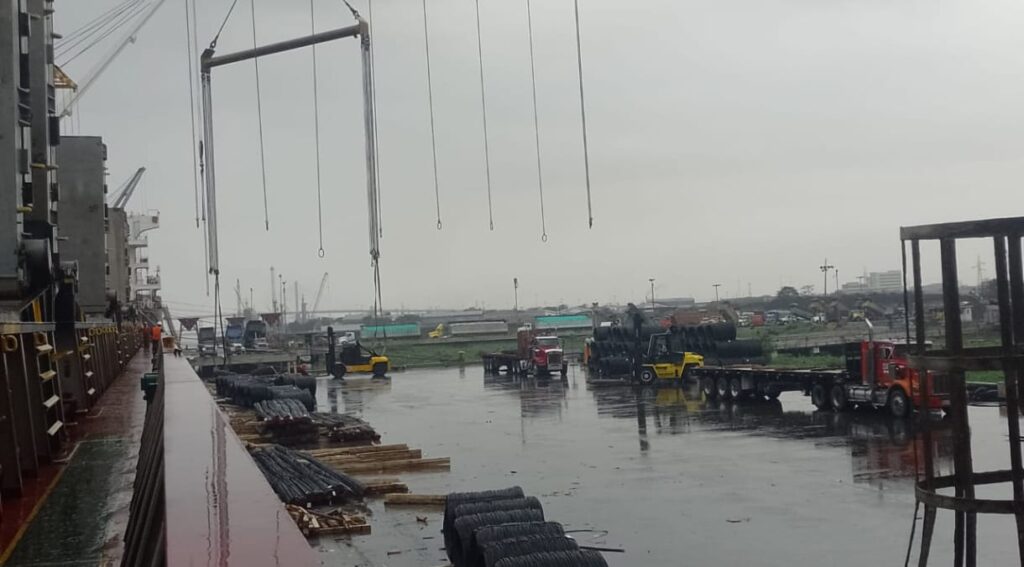
Behind Lomé lies its catchment: the corridor to Burkina Faso, Niger and Mali. Receivers in that hinterland want to know when their cargo landed and when it left the port, and the desk reports both. Customs release, delivery orders and transport are coordinated with the clearing agents the receiver appoints.
Where a cargo is split between Lomé and another port, or a vessel loads at Lomé for several destinations, one file follows the cargo and the documents stay consistent.

Husbandry at Lomé: crew movements (routine, via Gnassingbé Eyadéma International Airport), bunkers (established), fresh water, provisions, garbage, spares, cash and medical cases, each handled with the call and each shown as a line in the DA with its receipt.
Where the charterer's agent holds the cargo call, owners place their husbandry with the desk as protecting agent and receive a separate owner's account.

Every port has a fact that decides more calls than the tariff does. At Lomé, Lomé's anchorage is a recognised bunkering and ship-to-ship area for the Gulf of Guinea, and the transshipment terminal keeps berth windows tight. The desk builds the arrival plan, the berth request and the crew plan around it.
The partner agent at Lomé lives with the port every day; the Mombasa desk brings the principal's standards, the DA format and the reporting, and stands behind the service.

Large container ships, bulk carriers, tankers, general cargo ships and naval vessels, for cargo calls, bunker calls, crew changes and stores.
Our partner agent at Lomé, appointed and instructed by Maingate Shipping, attends the vessel; the Mombasa desk coordinates, reports to the principal and is responsible for the service.
A proforma DA is issued on the port's tariff before the call, the advance is remitted, and the final DA with every receipt reconciles against it within the agreed period.
Crew changes are routine via Gnassingbé Eyadéma International Airport. Yes, bunkering is established at Lomé and bunker-only calls are handled by the desk.
Yes. The Africa agency line covers West and Central Africa and the rest of the continent on one instruction, with a DA per port on one account.
Receipts behind every line, a record behind every stoppage, a desk behind every call.
The desks below cover the same coast and the same principals as Lomé.
Also on maingateshipping.com: Ship agency at Mombasa · Ship agency and charter brokers · Ship brokerage · About Maingate · Contact
Maingate Shipping Limited · Express Building, Moi Avenue, Mombasa, Kenya · ops@maingateshipping.com · +254 784 622 091